A site, and the machinery behind it.
Pages are made of blocks. Blocks carry your brand tokens. Everything a visitor does — an enquiry, a booking, an order — becomes a record you can find later.
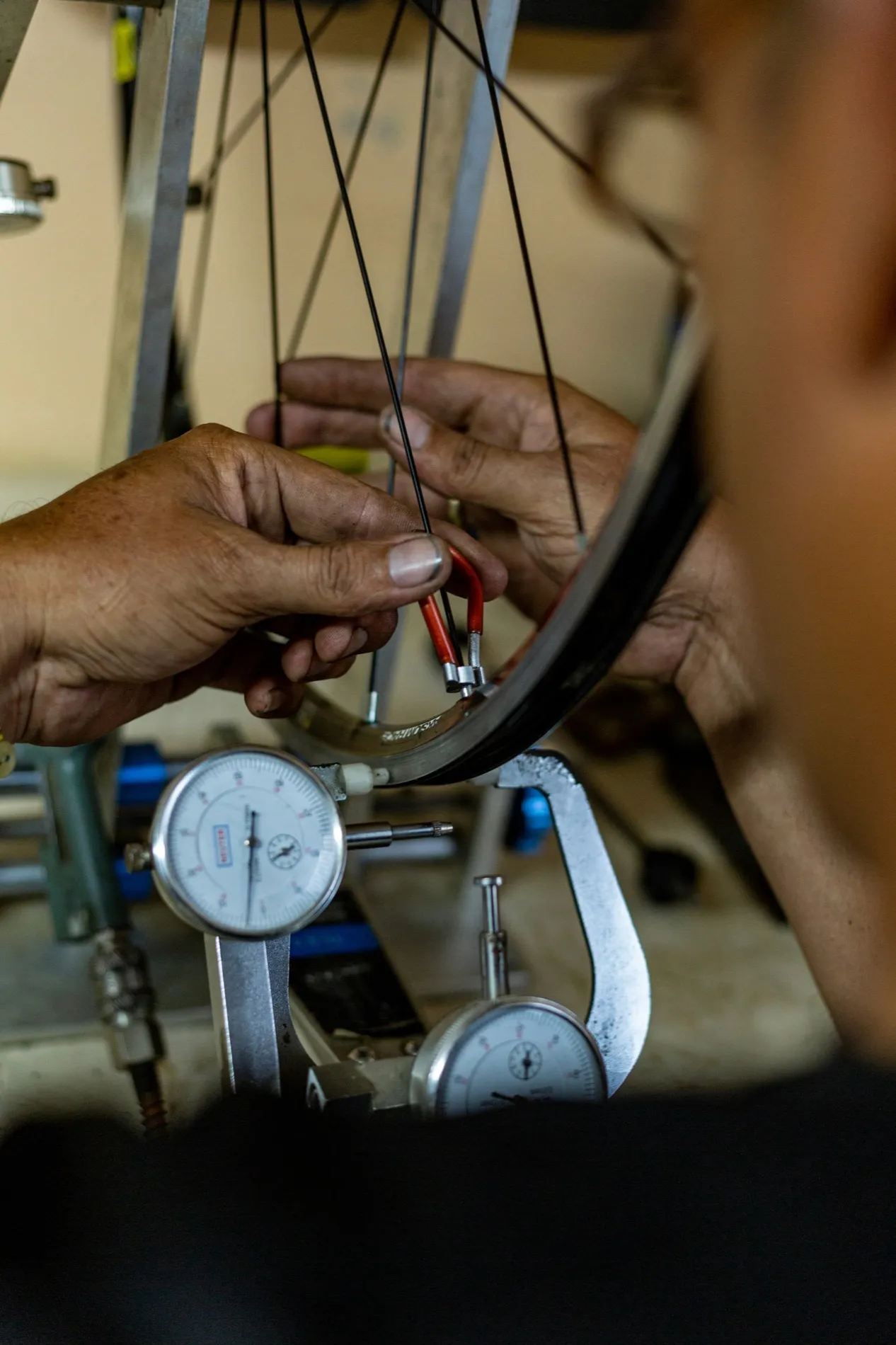
Four steps, and none of them is a migration.
You can stop after any of them. A site with one page and a working contact form is a finished thing.
Sign up on the platform. You get a site with a home page, a navigation partial, a footer and a not-found page already in it.
Three colours generate the whole token scale — headings, body, muted, borders, the inverse band, and readable text on your accent. Fonts are slots you bind to roles.
Drag elements onto the canvas, or edit text in place. Each node carries desktop, tablet and mobile styling, plus hover and focus.
Pages are drafts until you say otherwise. The domain is the last step, on purpose — a site in progress should not be reachable.
Write it once. Serve it twice.
Translation here is an overlay keyed to the text itself, not a second copy of every page. Edit an English sentence and its Dutch counterpart stays attached to it.
Your default language serves unprefixed. Every other enabled language serves under its code — this page is also at /nl/how-it-works.
The language switcher renders plain anchors to the current page in each language, so it works with no JavaScript at all.
Missing strings can be machine-translated in bounded batches, marked as machine, and never overwriting a human edit. It is a scaffold to correct, not a finished translation.
One thing worth knowing before you plan URLs: slugs themselves are not translated. The Dutch version of /how-it-works is /nl/how-it-works, not a Dutch word. That is the current behaviour, and this site runs on it.
What happens when you press publish.
The page is rendered on the server, so what a visitor and a search engine receive is finished HTML.
Make the first page today.
Everything above is reversible. Pages stay drafts, and the domain is the last thing you attach.